
In today’s fast-changing manufacturing world, laser cutting technology is now a key tool in many industries. These machines are very precise, efficient, and flexible, changing how things are made. But there are lots of laser cutting machine manufacturers out there, so finding one that fits your business needs is a big challenge. This article will break down the main things to think about when choosing a laser cutting machine manufacturer. It will help you find the best option among all the different brands.
Ⅰ. Clarify Your Needs: From Materials to Equipment Parameters
The first step in choosing a laser cutting machine manufacturer is to define your needs at home. Different tasks of processing have varying requirements for the performance of laser cutting machines. You need to specify the type and thickness of materials that will be cut. For metalworking, are you going to cut thin sheets or thick plates? What material will it be: stainless steel, aluminum alloy, or any special metallic materials? These factors shall directly lead to the appropriate decision regarding equipment power and the related configuration of a cutting head. In general, thick metal sheet cuts require high-powered laser cutting machines, while thin sheet cuts may apply relatively lower-powered equipment. Worktable size should also be determined as per the maximum workpiece size so that production requirements are met.
After knowing the basic needs, you may do a preliminary screening of several reputable laser cutting machine manufacturers by these parameters. At this stage, you may refer to the performance and parameters of equipment available in the market to be able to know what advantages and characteristics different brands have.
II. Core Components and Technology
The core components of a laser cutting machine are the key to its performance. When selecting a laser cutting machine manufacturer, it is essential to thoroughly understand these core components. For example, the quality and performance of components such as the laser cutting head, laser generator, and servo motor directly determine cutting speed, precision, and stability. A high-quality laser cutting head provides more stable beam output and more precise cutting results; an efficient laser generator ensures the equipment maintains high energy output during prolonged operation; and high-precision servo motors enable rapid and accurate positioning, thereby enhancing production efficiency.
III. After-Sales Service
The importance of after-sales service, while the equipment is in use, cannot be overemphasized. No matter how advanced the equipment is, it can still develop faults or need some maintenance. This underscores why the choice of a laser cutting machine manufacturer should be hinged on those who offer high-quality after-sales services. High-quality after-sales service should cover more than just equipment installation and commissioning, operator training, and technical support. It should also cover equipment repairs, spare parts supply, and software upgrades.
Ask about their after-sales service team, how fast they respond, and what their service covers. It is also good to know the manufacturer’s warranty policy and repair costs. The choice of a supplier who has an all-around, quick, and inexpensive after-sales service will lower in a big way the usage cost of the equipment as well as the risk of maintenance.
Ⅳ. Equipment Operability and Software Support
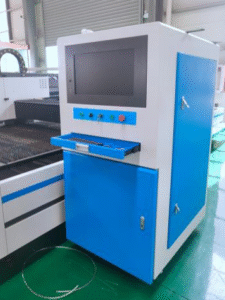
When choosing a laser cutting machine manufacturer, how well the laser cutting machine works and the software it uses are very important. If the machine is easy to use and has a clear interface, it will take operators less time to learn how to use it. This will help increase production efficiency. Most modern станки лазерной резки come with advanced control systems and software. These support different programming methods and cutting modes.
Furthermore, the compatibility and functionality of the software are also crucial. Selecting a manufacturer that provides robust software support will enable your equipment to integrate more effectively with the company’s production management system and other devices. For example, some laser cutting machines’ software supports multiple data format imports, enabling seamless integration with CAD/CAM software for rapid transition from design to processing; other devices feature intelligent nesting functionality, automatically optimising cutting paths to improve material utilisation and cutting efficiency.
Ⅴ. Price and Cost-Effectiveness
Price has always been the major factor when choosing among different laser cutting machine manufacturers. In addition to that, other factors also determine the final decision besides price. While considering cost-effectiveness, it should also adequately fulfill the requirements of quality and performance for production. Normally, prices for laser cutting machines vary with power, configuration, brands, and levels of technology. It will be a good decision to select that manufacturer within the budget who offers equipment that is highly cost-effective.
When you look at the price, think about more than just the first cost. You also need to think about how much it costs to run, how much maintenance it needs, and how long it will last. For example, high-power laser cutting machines cost more at first, but they cut fast and use less energy. This can save you a lot of time and money over time. On the other hand, low-power machines are cheaper, but they might not be able to keep up with high-efficiency production. This can slow down your production and cost you more in the end. So when you choose a laser cutting machine manufacturer, you need to look at the equipment’s performance quality, after-sales service, and price. This way, you can make sure your investment is smart and you get the most out of it.
Ⅵ. Conclusion
Choosing a good laser cutting machine manufacturer directly affects production efficiency and the quality of products. Define your requirements explicitly, pay attention to the core components and technology focus, put after-sales service in the first place, evaluate brand reputation, consider equipment operability together with software support, and balance the price against cost-effectiveness. Only by taking all these factors into consideration can you make sure that the equipment sustains efficient and stable operation for a long period of time; hence, continuous benefits accruing to your company.