
I. Введение
In the basic realm of metal work, the листопрокатный станок is seen as an important tool, used to turn flat steel plates into accurate cylinders, cones, and curves for many uses. But for any company wanting to put money into this skill, a key question comes up: should you opt for a hydraulic plate rolling machine or a mechanical system?
It is not a trivial decision because it affects everything, beginning from the initial capital outlay and capability of operations to maintenance of costs in the long run and return on investment. This guide keenly takes a look at the main differences, advantages, and best applications of each system with an end goal to ensure you have clarity to confidently make an informed decision that sits well with your production demand, technical requirement, and financial strategy.
II. Delving into the Hydraulic Plate Rolling Machine
Hydraulic systems represent the most modern, up-to-date source of power and control among industrial machines. In reference to plate rolling, they use pressurized fluid for the generation as well as transmission of great force required in bending thick metals which are high in strength.

1.Core Principle and Operation
The basic operation of a 3 ролика гидравлическая машина прокатки пластины is based on the principles of Pascal’s law. An electric motor-driven hydraulic pump pressurizes oil and sends it through appropriate valving and hosing to powerful hydraulic cylinders. These hydraulics directly act toward key movements in the machine—mostly vertical adjustment for the top roll and side rolls’ pivotal movement in initial pinch models. All this is controlled by an advanced control system that would manage pressure as well as flow to allow smooth, strong, and well-measured application of force throughout the bending cycle.
2.Key Advantages
The hydraulic design offers several compelling benefits that make it a preferred choice for heavy-duty applications.
(1)Exceptional Power and Force
It delivers an exceptional power-to-size ratio, allowing a relatively compact machine to generate the immense force required to roll very thick plates and high-tensile materials like stainless steel and armor plate.
(2)Smooth and Stable Operation
The operation is notably smoother and quieter than mechanical alternatives. The hydraulic fluid itself acts as a dampener, absorbing shocks and vibrations, which significantly reduces stress on the machine’s structure and the workpiece itself.
(3)Unparalleled Control and Precision
Modern hydraulic machines provide unparalleled control, allowing operators to fine-tune bending pressure and speed with great precision. This level of control is crucial for achieving exact radii and avoiding material damage. A classic example of this high-performance capability is the Листопрокатный станок W12, a model driven by hydraulics that is renowned for its power, precision, and ability to handle demanding projects with ease.
3.Considerations and Ideal Use Cases
Hydraulic machines are more complex and typically, where there is an issue of oil leak or pump failure the repair may be more involved. Besides, their initial purchase price too. So, for fabricators who work with thick material above 20 mm on a regular basis and high-strength alloys or require finish quality without marring, hydraulic machines become an indisputable right choice.
III. Examining the Mechanical Plate Rolling Machine
Mechanical plate rolling machines are the traditional workhorses of the industry, relying on a system of gears, shafts, and worms to transmit power from an electric motor to the rolls.
1.Core Principle and Operation
In a 3 ролика механическая машина прокатки пластины, a powerful motor provides rotational energy. Energy goes through a clutch to a gearbox, then drives big reduction gears and worm screws. These parts change the fast spin of the motor into the huge slow force needed for the rolls. The top roll can be set by hand or with a motor screw system that is strong but does not allow as much small control as a hydraulic cylinder. The whole setup shows simple brute mechanical power.
2.Key Advantages
The greatest strength of mechanical machines is in their simplicity and longevity. With fewer complex parts, i.e., pumps and valves, there is generally less to maintain, and the maintenance team finds it easier to comprehend any problem related to the machine. They are mostly cheap in initial purchase costs; hence they provide an easy entry point for small shops or shops that operate under tight budgets. If an operation requires running one particular type of job on mild steel of consistent thickness, then this type of machine will work for years and years without any problem due to its robust construction. Some modern hybrids, such as the Листопрокатный станок W11S wisely adopt advanced hydraulic and mechanical transmission technology to beef up performance while keeping a low profile in terms of cost.
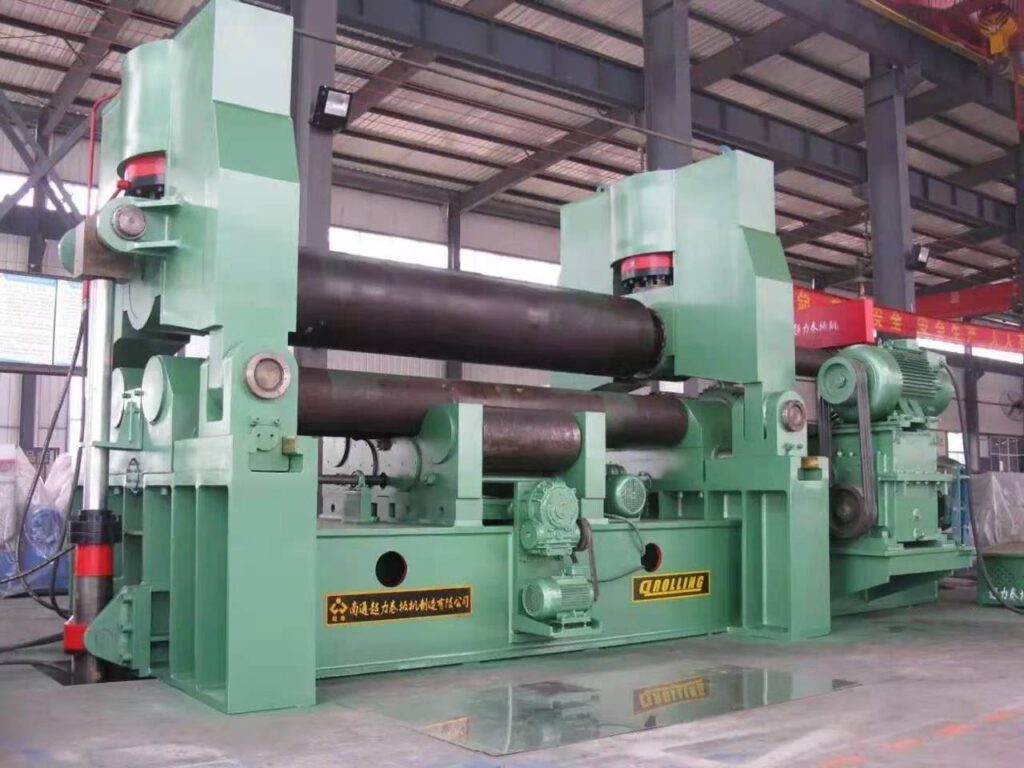
3.Considerations and Ideal Use Cases
Mechanical systems do not allow much control of bending force and therefore are not preferred for precision work in thin or sensitive material. These are noisier to operate and generate more vibration. With limited adaptability for different materials and thicknesses, these machines perform best when there is high-volume processing of low-to-medium thickness carbon steel where the initial cost is the primary concern.
IV. Head-to-Head Comparison: Making the Informed Choice
A direct comparison between hydraulic and mechanical systems reveals distinct operational and economic profiles that dictate their ideal applications. This analysis provides a clear framework for selection based on key operational parameters.
1. Summary of Key Differentiators
Hydraulic systems deliver more power, better control, greater operating flexibility, and quality of finish product. Hydraulics technology is therefore regarded as an investment towards enhanced productivity in the long run. Mechanical systems provide an inverse value proposition such that it emphasizes lower capital investment and mechanical simplicity at the cost of precision and adaptability.
2. Critical Decision-Making Parameters
Equipment selection demands thorough analysis of three key operational factors that affect both performance and cost-effectiveness.
(1) Material Specifications
This analysis focuses on the range of materials to be processed, paying special attention to maximum thickness and strength characteristics. The assessment should cover both immediate production needs and future project requirements.
(2) Quality Requirements
This evaluation addresses precision needs and surface finish standards for finished products. Applications requiring close tolerances and superior finishes typically benefit from hydraulic system capabilities.
(3) Cost Considerations
This examination includes the complete investment picture beyond the initial purchase. Important factors include maintenance expenses, energy usage, and potential operational interruptions throughout the equipment’s service life.
3. Strategic Application Recommendations
Mechanical systems are technically adequate and economically feasible for operations that primarily process light gauge carbon steel in high volume, repetitive situations. Fabricators who work with a wide range of materials that include high-tensile alloys and thick plate need hydraulic capability.
V. Conclusion
The argument of what technology is best between a hydraulic and mechanical plate rolling machine does not make sense. The answer is in what fits perfectly into your specific business environment. In fact, the 3 rolls mechanical plate rolling machine has strength and cost advantages for less demanding applications. On the other hand, only power, precision, and flexibility from a modern 3 rolls hydraulic plate rolling machine can meet our high-end boutique fabrication demands as well as allow future expansion. You can improve this decision further by reviewing your present projects in light of material portfolios and strategic objectives to choose a machine that will be an agent boosting productivity plus profitability rather than merely comparing specifications. Eventually, such an informed investment will better equip your workshop hence setting you apart for success in the most demanding metal fabrication market.